
Sidewalks, Walkways & Flatwork
Safe, attractive pathways that enhance your property and welcome visitors to your door.
Why Concrete Walkways Improve Your Property
Your walkways create the first impression visitors get when they approach your home. A cracked, uneven, or poorly maintained path suggests neglect. A smooth, well-designed concrete walkway shows you care about your property and the safety of everyone who visits.
Concrete walkways also solve practical problems. They prevent mud from tracking into your house during rain. They give you a clear, safe path during winter when grass gets slippery. They protect your lawn from wear patterns caused by constant foot traffic. Homeowners in Dale City appreciate concrete paths because they work year-round without maintenance headaches.
Well-placed walkways increase property value too. Real estate agents know buyers notice curb appeal and functional outdoor spaces. A concrete path from your driveway to your front door or from your patio to your backyard makes your property more appealing and more valuable.
Types of Concrete Flatwork We Install
Flatwork refers to any horizontal concrete surface that is not a building foundation. Here are the most common flatwork projects we handle in Dale City:
- •Sidewalks: Front walkways from the street or driveway to your front door. Typically 3 to 4 feet wide and 4 inches thick.
- •Garden Paths: Narrower walkways that wind through landscaping or connect different areas of your yard. Can be straight or curved to fit your landscape design.
- •Courtyard Slabs: Open concrete areas between buildings or in front entries. Often combined with decorative elements or borders.
- •Equipment Pads: Small concrete slabs for air conditioning units, generators, or pool equipment. These keep units level and protect them from ground moisture.
- •Shed Floors: Concrete bases for storage sheds and outbuildings. A solid concrete floor prevents rot and keeps your belongings dry.
Design Options for Custom Walkways
Concrete walkways do not have to look plain or boring. You have design choices that add character while staying within budget.
Width and Layout
Standard walkways run 3 to 4 feet wide, enough for one person to walk comfortably. Increase width to 5 or 6 feet if you want two people to walk side by side. We can create straight paths for a clean, modern look or curved paths that flow with your landscape. Curves cost slightly more because of additional forming work, but they soften the appearance and make your yard feel more inviting.
Surface Finishes
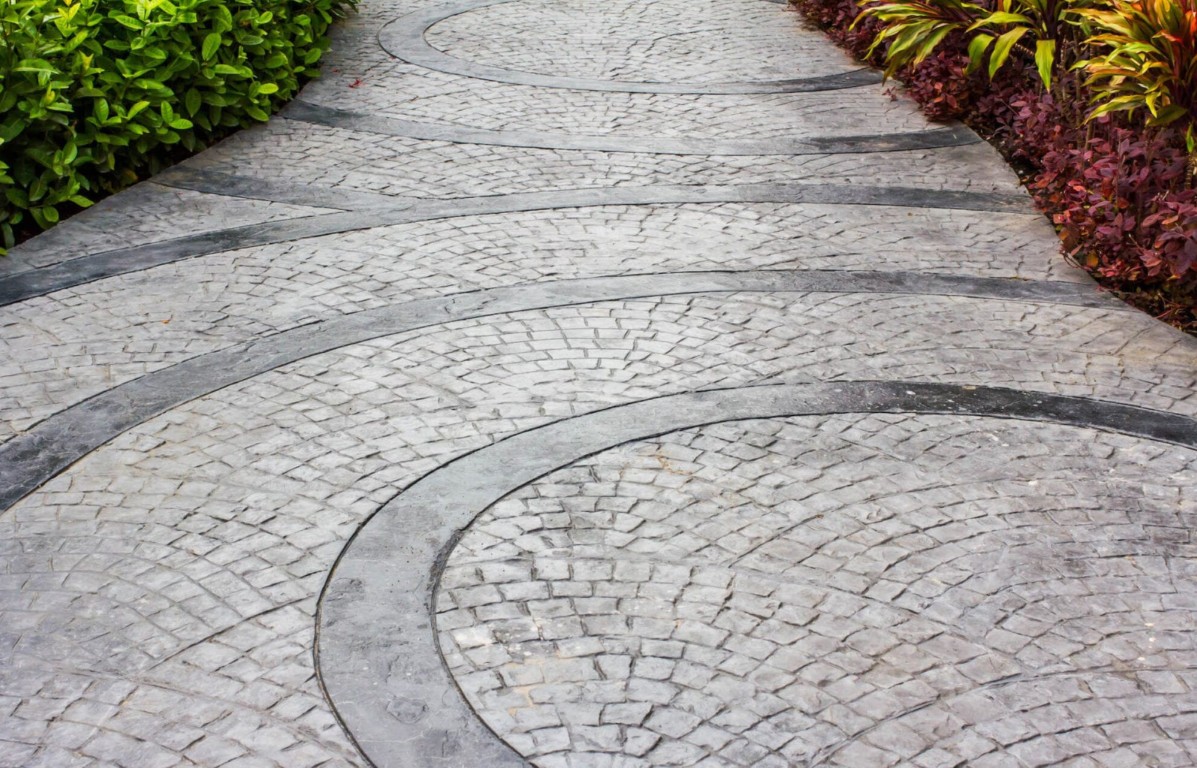
Choose from several finish options based on your style and budget. Broom finish provides traction and costs the least. Smooth troweled finish works for covered walkways or formal entries. Stamped concrete gives you patterns that look like stone, brick, or wood. Exposed aggregate shows natural stones in the concrete mix for texture and visual interest.
Colors and Borders
Colored concrete lets you match existing hardscaping or coordinate with your home exterior. Earth tones, grays, and brick reds work well in Dale City neighborhoods. Add a contrasting border to define edges and create visual interest. Borders can be different colors, patterns, or textures from the main walkway.
Lighting Integration
We can work with your electrician to install conduit under walkways for landscape lighting. This planning during installation saves you from digging up new concrete later. Well-lit walkways improve safety and curb appeal.
How We Build Long-Lasting Walkways
Proper installation makes the difference between a walkway that lasts 30 years and one that cracks in five. We follow a proven process for every project.
Layout and Excavation
We mark the walkway path and check for proper slope. Water needs to drain away from buildings and off the walkway surface. Then we excavate to the proper depth, removing grass, roots, and loose soil. Most residential walkways need 6 to 8 inches of excavation to allow room for the base and concrete.
Base Preparation
We install a compacted gravel base that prevents settling and provides drainage. Virginia clay soils hold water, so good drainage under your walkway prevents frost heaving in winter. We use a plate compactor to ensure the base stays solid under the concrete weight.
Forms and Reinforcement
We set forms to define walkway edges and maintain consistent thickness. Most walkways use 4 inches of concrete. We add wire mesh or fiber reinforcement to control cracking. For walkways that cross driveways or handle vehicle traffic, we increase thickness and reinforcement.
Pouring and Finishing
We pour concrete and work it into all corners of the forms. Then we level, smooth, and apply your chosen finish. We cut control joints every 4 to 6 feet to manage cracking as concrete cures. These joints give concrete controlled places to crack, keeping cracks tight and even rather than random and wide.
Curing and Protection
New concrete needs time to cure properly. We cover it or apply curing compound to retain moisture. You can walk on your new walkway after 24 hours, but wait at least a week before driving over it if it crosses your driveway. Proper curing creates stronger, more durable concrete.
Keeping Your Walkways Looking Great
Concrete walkways need minimal maintenance, but a little care extends their life and keeps them looking good. Sweep or blow off leaves and debris regularly. Clean spills and stains promptly. Pressure wash once or twice a year to remove dirt and grime.
Avoid using salt for ice removal in winter. Salt damages concrete surfaces and causes spalling. Use sand or cat litter for traction instead. If you must use de-icer, choose calcium magnesium acetate products that are safer for concrete.
Seal your walkways every two to three years to protect against moisture, stains, and wear. Sealing is especially important for decorative or colored concrete to maintain appearance. A quality sealer costs little and adds years to your concrete life.