
Concrete Slab & Foundation Work
Build on a solid foundation that protects your investment for generations.
Why Your Foundation Matters More Than You Think
Your foundation holds up everything above it. Walls, roof, floors, and everything inside your building sits on that concrete base. If the foundation fails, nothing else matters. Cracks spread. Doors stick. Windows break. Fixing foundation problems costs tens of thousands of dollars, so getting it right the first time saves you money and stress for decades.
Here in Dale City, soil conditions vary from lot to lot. Clay soils expand when wet and shrink when dry. Sandy soils drain well but compress under weight. We test your soil and design foundations that handle local conditions. A foundation that works in one neighborhood might crack in another. Our team knows Dale City soil and builds foundations that last.
Concrete slab foundations work great for garages, sheds, room additions, and new homes. They cost less than basement or crawl space foundations and provide a solid, level base for your structure. Slabs also resist moisture and pests better than wood framing on piers. You get a clean, dry floor that stays level year after year.
Types of Concrete Foundations We Build
Different projects need different foundation types. We match the foundation to your building and site conditions. Here are the most common options:
- •Slab on Grade: A single layer of concrete poured directly on prepared soil. This works for garages, sheds, and single-story structures. It provides good support at the lowest cost.
- •Monolithic Slab: The slab and foundation walls pour together in one piece. This design resists cracking and works well for small buildings and additions.
- •Stem Wall Foundation: Concrete footings and walls sit below the frost line, with a slab poured inside. This design handles sloped lots and provides extra protection from freezing.
- •Thickened Edge Slab: Extra concrete around the perimeter distributes weight and prevents edge cracking. Most residential slabs use this design.
We recommend the foundation type based on your building size, local codes, soil conditions, and budget. Every project gets a custom approach because every site is different.
How We Build Foundations That Last
Foundation work follows a strict sequence. Skip a step or rush the process, and you end up with problems that show up years later. We take our time and do every step correctly.
Site Survey and Soil Testing
Before we dig, we survey your lot to check elevation, drainage, and underground utilities. We test the soil to determine bearing capacity and identify problem areas. Clay soils need extra base preparation. Sandy soils might need deeper footings. We catch these issues before they become expensive problems.
Excavation and Grading
We excavate to the proper depth based on frost line requirements and your foundation design. In Virginia, footings typically go down 18 to 30 inches depending on soil type. We grade the site so water drains away from your building. Poor drainage causes foundation problems even if the concrete itself is perfect.
Base Preparation
We install a gravel base under the slab and compact it thoroughly. This layer prevents settling and provides drainage. We also install a vapor barrier to block moisture from the ground. Moisture migrating through concrete causes floor damage, mold, and musty smells. A proper vapor barrier stops these problems before they start.
Reinforcement and Utilities
We place rebar or wire mesh according to engineering specifications. Reinforcement keeps concrete from cracking as it cures and handles stress from building loads. We also coordinate with plumbers and electricians to install any pipes or conduits that run under the slab. Once concrete sets, you cannot easily add utilities.
Concrete Pour and Finishing
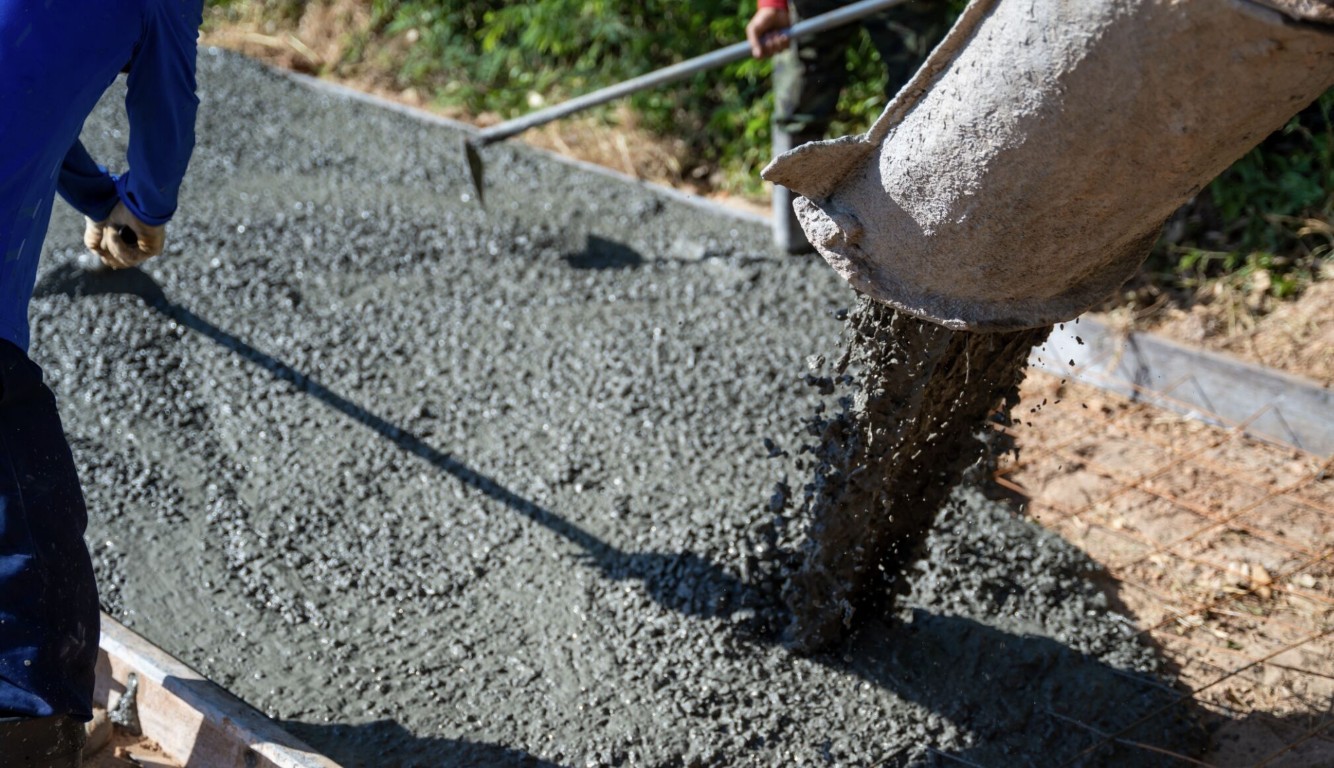
We pour concrete at the correct thickness for your project. Residential slabs typically use 4 inches, but we increase thickness for heavy loads or poor soil. We use vibrators to remove air pockets and ensure the concrete fills every corner of the forms. Then we level and finish the surface smooth and flat.
Curing takes at least seven days. We keep the concrete moist during this time to prevent surface cracking. Proper curing makes concrete stronger and more durable. A well-cured foundation rarely needs repairs, even after decades of use.
Commercial and Industrial Slab Work
Commercial slabs handle heavier loads than residential foundations. Warehouses, retail stores, and manufacturing facilities need concrete that supports forklifts, inventory, and equipment without cracking or settling. We design and build commercial slabs to meet your specific load requirements.
Industrial floors also need specific finishes. Polished concrete works great for retail spaces. Rough finishes provide traction in loading areas. We can add slopes for drainage, install floor drains, and create level pads for machinery. Commercial concrete projects require careful planning and experienced crews. We handle projects of all sizes in Dale City and surrounding areas.